

A project aimed at celebrating the UK’s fallen heroes has received a boost from a probation-run scheme.
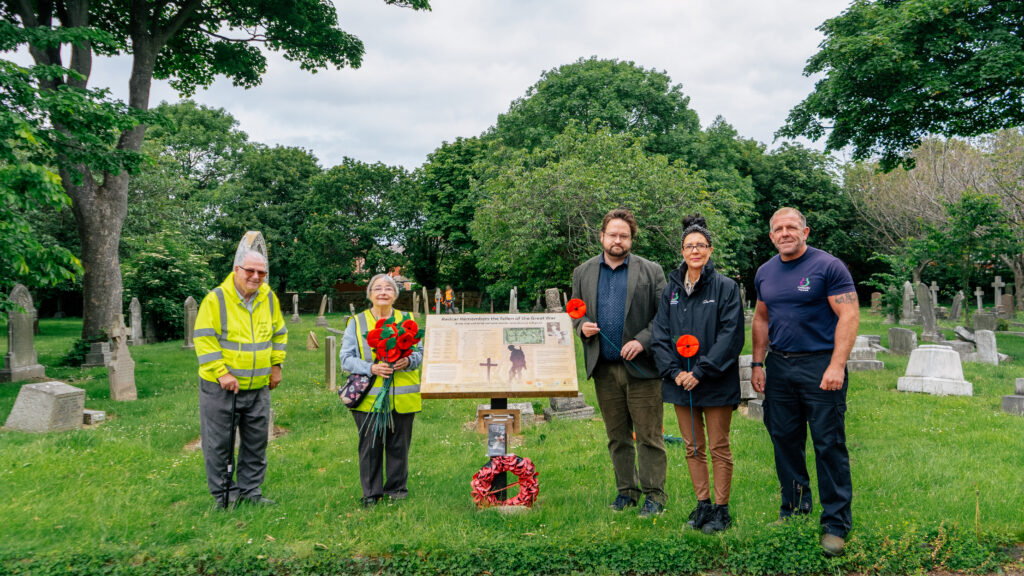
Cleveland Police and Crime Commissioner (PCC) Matt Storey has visited work on Redcar Cemetery. Work is being carried ahead of this year’s Armed Forces Weekend.
Under supervision, people on probation placed poppies on stakes on the graves of service personnel to honour the country’s late veterans.
Workers on the project are all taking part in Community Payback. As a result, they have to complete between 40 and 300 hours of unpaid work.
Community Payback takes place over three to four days per week, as part of a suspended sentence or community order.
Free help on offer
Now Matt is encouraging more community leaders and organisations take advantage of the free help on offer.
Matt said: “Unpaid work carried out as part of the Community Payback scheme adds significant value to the community.
“It not only improves our public spaces but it helps people on probation develop structure, skills, and a sense of value in their lives. It’s an approach, which I wholeheartedly support.”
Over the past two years, Matt has visited a wide range of probation schemes and seen the difference, which they have made to both communities and those taking part.
Projects have ranged from maintaining Cleveland’s beaches to make them clean and safe for families and marine life to developing allotments to create green spaces to bring communities together.
Matt has written to Cleveland’s MPs and councillors, asking them to nominate projects which could benefit from additional help.
Longer-term tasks
Now his office is asking community organisations if they have any longer-term and indoor tasks, which will benefit the public and keep teams supervised by probation busy from now into the winter months.
Examples of unpaid work projects could include:
- Improvements to public spaces and buildings: painting, decorating and litter picking;
- Groundworks and maintenance: clearing overgrowth, path maintenance and restoring green spaces.
All unpaid work is managed and supervised by an on-site Community Payback Supervisor from Probation Service North East. Participants are given the tools and materials needed to complete the work.
Nominating a project is quick and easy. All Submissions can be made online by searching ‘nominate a community payback project’.
Submissions from across Cleveland are reviewed by Probation Service North East.