

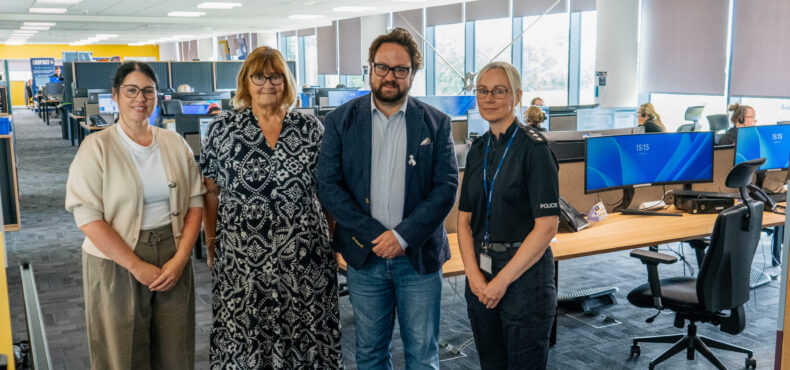
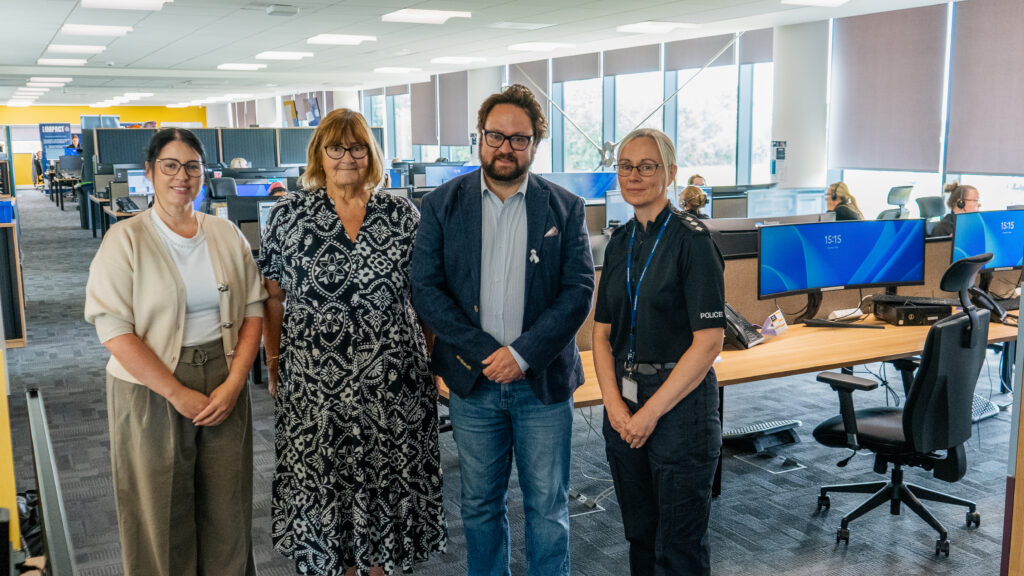
Staff in Cleveland Police’s 999 control room will now be supported by specialist domestic abuse workers to enhance the service provided to victims and survivors.
It was announced in June that Cleveland Police would be one of 12 additional forces identified for roll-out of the second phase of the ‘Raneem’s Law’ pilot.
Halving violence against women and girls
The pilot is part of the Government’s efforts to halve violence against women and girls (VAWG.) The move has been commissioned by the Office of the Police and Crime Commissioner.
A pool of domestic abuse specialists from Harbour Support Services will work now directly within Cleveland Police’s control room. Their role is to provide real-time advice to officers and staff on assessing risk and identifying safeguarding opportunities.
They will act as a ‘critical friend’ to staff in the control room. Staff aim to ensure that the best service possible is provided to victims and survivors during initial police contact.
The service will be delivered during periods of peak demand for domestic abuse-related incidents, between 5pm and 1am, every single day of the week. This will include bank holidays like Christmas Day.
Raneem’s Law
Raneem’s Law was introduced in memory of Raneem Oudeh and her mother Khaola Saleem. They were murdered by Raneem’s ex-husband in the West Midlands in 2018.
Despite making four 999 calls to police on the night of the murders, police did not respond in time to save Raneem and her mother.
Fifth of all crime
Latest figures show that VAWG offences make up around a fifth of all crimes reported to Cleveland Police. There were 16,047 offences reported between 1 April 2025 and 31 March 2026.
Inspector Roger Millward, overseeing the pilot for Cleveland Police, said: “Our priority is to continue ensuring victims and survivors have the confidence to make the first step in reporting domestic abuse as well as finding ways that will keep encouraging it.
“This pilot is another example of us doing that and putting victims and survivors first and at the heart of everything we do.
“By working collaboratively with Harbour in our control room enables our approach to be even stronger and powerful by having information and advice available to officers and staff that ensures victims and survivors are safeguarded and receive the best possible response.”
Police and Crime Commissioner Matt Storey: “When someone picks up the phone to report domestic abuse, it presents a crucial opportunity for police to safeguard people from harm.
“We have seen the terrible consequences when the severity of the risk facing victims is not properly identified, assessed and responded to.
“Harbour’s expert workers will be a powerful asset to Cleveland Police’s control room, offering independent, practical advice to ensure victims and survivors get the best response possible.”
Lesley Gibson, Chief Executive of Harbour, said: “We’re delighted to be part of this pilot scheme. When victims of abuse call the police, they expect that they will be believed, understood and protected from harm.
“Our workers will be in police control room when more victims tend to call for help, to ensure officers and staff are taking the time to carefully consider the risk they’re facing.
“Sadly this project won’t bring back Raneem and Khaola, but by working to improve the level of service provided to all victims, we stand a better chance of preventing similar tragedies in the future.”