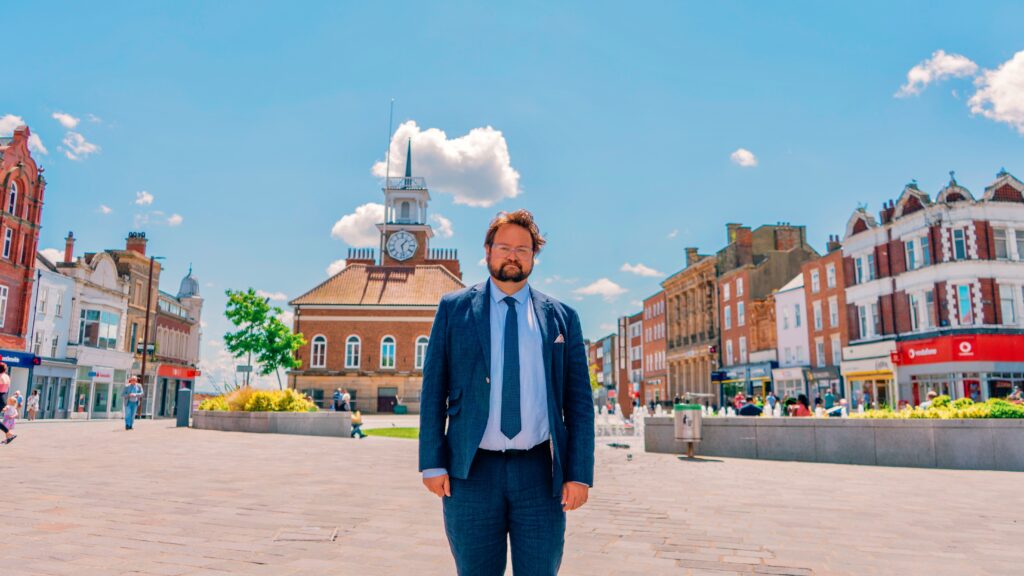
Police and Crime Commissioner for Cleveland (PCC) Matt Storey has strongly challenged claims that larger police forces automatically deliver better policing outcomes.
Matt warns proposals for regional “super forces” could weaken local accountability, reduce community influence and divert attention from reforms that would genuinely improve policing outcomes.
Matt’s comments come as the Government considers recommendations from Lord Hogan-Howe’s independent review of police force structures and wider policing reforms.
Comments follow an event held in Manchester today (6 November,) at which senior policing leaders advocated reducing the number of police forces in England and Wales.
Matt said: “The people of Cleveland deserve a police service that understands the distinct and unique challenges and opportunities across Hartlepool, Middlesbrough, Redcar and Cleveland, and Stockton-on-Tees.
“Our communities expect local policing decisions to be shaped by local needs, local priorities and local accountability. Any proposal that risks moving decision-making further away from the people we serve must be considered extremely carefully.
“While I support efforts to improve efficiency and ensure the best possible use of public money, this must not come at the expense of local policing, local partnerships and democratic accountability.”
Enormous Respect for Officers
Responding to suggestions that smaller forces are no longer equipped to meet modern policing challenges, Matt said: “I have enormous respect for the officers, staff and volunteers who serve Cleveland.
“Suggestions that forces like Cleveland are somehow incapable of meeting the demands of modern policing are an insult to the hardworking and committed people who protect our communities every day.
“Our officers and staff work tirelessly to keep people safe, support victims and bring offenders to justice. Their professionalism and dedication deserve recognition, not the implication that the answer lies simply in creating larger forces.
“It is wholly inappropriate for Chief Constables to be taking such a public and political stance on force mergers.
“PCCs and Mayors are elected to represent their communities and are accountable to the public for policing and crime. Decisions about the future structure of policing are matters for Government and elected representatives, not operational police leaders.
“For years, forces such as Cleveland have been disadvantaged by a broken and hopelessly outdated funding formula. That is where the real political debate should be focused.
“Instead, we are witnessing a spectacle around force mergers that risks distracting attention from the issues that matter most: fair funding, neighbourhood policing and delivering better outcomes for victims and communities.
“The issue is not force size. The issue is funding.
“Cleveland Police is one of the smallest forces in the country, yet it is one of the most improved.
“Despite long-standing structural underfunding, Cleveland Police brought more than twice the proportion of crimes to justice as the Metropolitan Police last year.
“Those figures demonstrate that success is not determined by the size of an organisation. It is determined by the quality of officers and staff, effective leadership, strong partnerships and a relentless focus on delivering justice.
“Cleveland Police remains over 220 officers below 2010 levels. That is the reform we desperately need: reform of the funding formula, not force boundaries.”
Matt said there is broad consensus across policing on strengthening national capabilities, but that does not require abolishing local forces.
Strengthening National Capabilities
He said: “There is a constructive debate to be had about strengthening national capabilities, and I support reforms that give policing the tools needed to tackle increasingly sophisticated criminality.
“You do not need force mergers to deliver a National Police Service. We should focus on reforms that improve policing outcomes, not costly reorganisations that risk weakening local accountability.
“There is not a compelling case for spending years – and potentially hundreds of millions of pounds – re-drawing maps, re-organising structures and creating uncertainty for communities when there is no evidence that doing so will improve public safety.”
Matt also pointed to Cleveland’s response to major incidents as evidence that the current model is capable of dealing with exceptional circumstances.
No Evidence
He concluded: “There is no evidence from the independent inspectorate, His Majesty’s Inspectorate of Constabulary and Fire & Rescue Services, that bigger forces are inherently better forces.
“Indeed, HMICFRS has repeatedly highlighted the impact of structural underfunding on Cleveland Police.
“Communities are not asking for police force mergers. They are asking for more neighbourhood officers, safer streets, visible policing, better support for victims and more offenders to be brought to justice.
“The Government has committed to strengthening neighbourhood policing and putting more officers back into communities. Why would we spend hundreds of millions of pounds on re-organising force boundaries when that money could instead be invested directly into frontline policing?
“These proposals are also difficult to reconcile with the Government’s wider devolution agenda. If we believe in putting more power into the hands of local communities, it makes little sense to move policing governance further away from the people it serves.
“Structural changes should never become a distraction from the day job of keeping people safe, reducing crime, supporting victims and maintaining public confidence. Any reform must be evidence led and clearly demonstrate improved outcomes for communities across Cleveland”.