
Extra funding will help a Middlesbrough-based charity identify more hidden victims of domestic and honour-based abuse (HBA).
The project run by the Halo Project and funded by Cleveland Police and Crime Commissioner (PCC) aims to reach black and minority ethnic women and girls (BME) most at risk of harm.
The Home Office recorded 49 incidents of honour-based abuse in the force area during year ending 31 March 2025.
However, BME residents are estimated to make up 8% of the area’s population.
Data from hospital accident and emergency departments shows a higher rate for injuries for BME women than for the population as a whole.
Analysis of Cleveland’s HBA figures against similar areas in the rest of the country suggests that Cleveland should be seeing 40 to 60 HBA cases annually. That means figures for Cleveland are relatively low.
Unreported cases
According to the Halo Project, this indicates that many domestic and honour-based abuse cases in Cleveland are going unreported each year.
Now Halo is hoping to provide extra support for 15 to 20 of the most at-risk BME women across Cleveland over the next 11 months, thanks to a £15,000 Protect and Support Fund grant from Cleveland PCC.
The Culturally Competent Crisis Response Service for Victims will be specifically designed for BME victims of HBA.
The project will increase targeted reach into local minoritised communities. It will also see Halo work with Cleveland Police and other partners to improve identification of and response to victims experiencing HBA and illegal cultural harms.
Support will enable Halo to respond to some of the unique problems faced by the region’s BME women. They include cultural isolation, immigration, language barriers and a fear of rejection by their community.
The one-off, PCC grant will also help Halo reach more women in Cleveland’s diverse communities.
It is hoped the project will give Cleveland Police a better understanding of HBA and its place in BME communities. As a result, Halo anticipates the force will become more able to respond to the needs of potential HBA victims after the pilot.
Regional leader
With the project, Halo hopes to become a regional leader in culturally-competent violence against women, domestic abuse and sexual violence (VAWDASV) services specifically targeted at BME women.
The work will also produce a model, which can be re-produced and rolled out more widely in future.
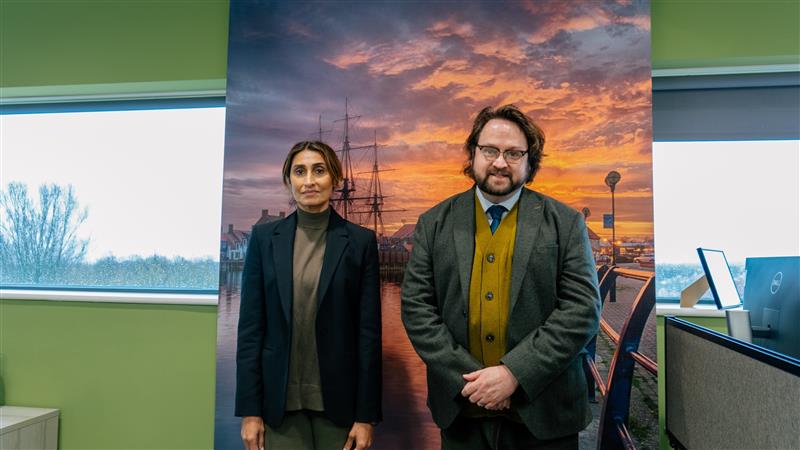
Yasmin Khan, Director and Founder of Halo Project, said “Survivors from Black and minoritised communities have told us time and again that they face additional barriers when seeking safety. Those barriers are rooted in culture, language, faith and fear of systems, which haven’t always protected them.
“This pilot isn’t just about filling gaps in provision, it’s also about creating pathways to safety, which survivors have designed with us, informed by their lived experience and cultural realities.
“By supporting this project, the Office of the Police and Crime Commissioner (OPCC) for Cleveland will be demonstrating its commitment and investing in survivors’ autonomy and safety today.
“It will also be building the evidence base for systemic change, which ensures no woman or girl is invisible to the services meant to protect them.”
Cleveland PCC Matt Storey said: “The Protect and Support Fund was set up to fund projects, which give enhanced support to vulnerable victims and aim to reach under-represented groups.
“Longer-term, this pilot seeks to develop services by and for women from black and minoritised communities. That means any model for future services will be designed specifically to meet their needs and respond to their individual circumstances.”