
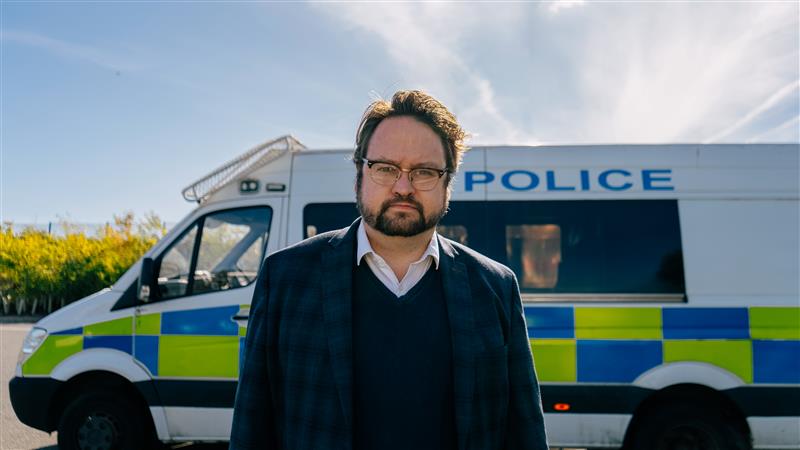
Police and Crime Commissioner Matt Storey has dubbed the Government’s latest funding settlement for Cleveland Police as “farcical” and placing “huge strain” on the force.
Due to Government grants rising at a significantly lower rate than inflation and pay awards, the force is facing a £2.4m funding shortfall – the equivalent of around 40 full-time police officers.
In December, Policing Minister Sarah Jones MP announced funding settlements for police forces across England and Wales for the 2026-2027 financial year.
After accounting for the cost of last year’s pay award, Cleveland effectively only received an increase of 2.9%, the lowest in the country and a real term reduction in funding.
The Government allocates funding for police forces based on the area’s population and does not account for levels of deprivation, need or recorded crime.
Despite reductions of 5% in the last year, Cleveland has the highest number of crimes per 1,000 population of any police force in England and Wales.
And almost a third of neighbourhoods in the Cleveland policing area are ranked in the top 10% most deprived areas nationally, the highest percentage of any force area in England.
‘Difficult challenges in the years ahead’
Matt said: “The system used to fund police forces in this country is broken. I’m saddened that despite my pleas, the Government has chosen not to heed my requests for fairer funding for Cleveland.
“Let’s be clear, this settlement completely fails to deliver the resources required to meet the demand faced by Cleveland Police and falls far short of what is needed.
“I’ve listened keenly as ministers promised to give police forces extra funds to reduce violence against women and girls, tackle knife crime and improve police visibility.
“This was welcome news for Cleveland, as it remains the force with the lowest number of officers compared to March 2010 – a sizable deficit of around 200 police officers.
“Yet the reality is quite different. The settlement we’ve received is far worse than I was expecting and leaves me facing some difficult challenges in the years ahead.”
Matt has sent three letters to Government ministers, seeking urgent clarity on how the decision on funding has been made. He has not received any response.
He added: “For the past few years, Cleveland Police has done everything the Government has asked, by surpassing police officer recruitment targets and investing in neighbourhood policing.
“In terms of performance, the force has been recognised by independent inspectors to be one of the most improved forces in the country. In latest figures published by the Government, crime has reduced in Cleveland by 5%, more than the national average.
“The Government has chosen to repay these efforts by redistributing funds from Cleveland to forces who have failed to deliver against national targets and who do not face the same rates of deprivation and crime.
“Not only is this deeply unfair, but completely irresponsible. The safety of Cleveland residents is being placed in jeopardy by an outdated funding system that defies all common sense.
“Cleveland Police officers, staff and volunteers get on with the job every day, regardless of the demand they face. The government must heed this call and deliver fairer funding for those hardworking officers and for all the people of Cleveland.”
Matt is proposing to increase the police precept – the amount local people pay for policing in their council tax – by £15 per annum for a Band D property. Despite the area’s deprivation, Cleveland already has the ninth-highest policing precept in England.