
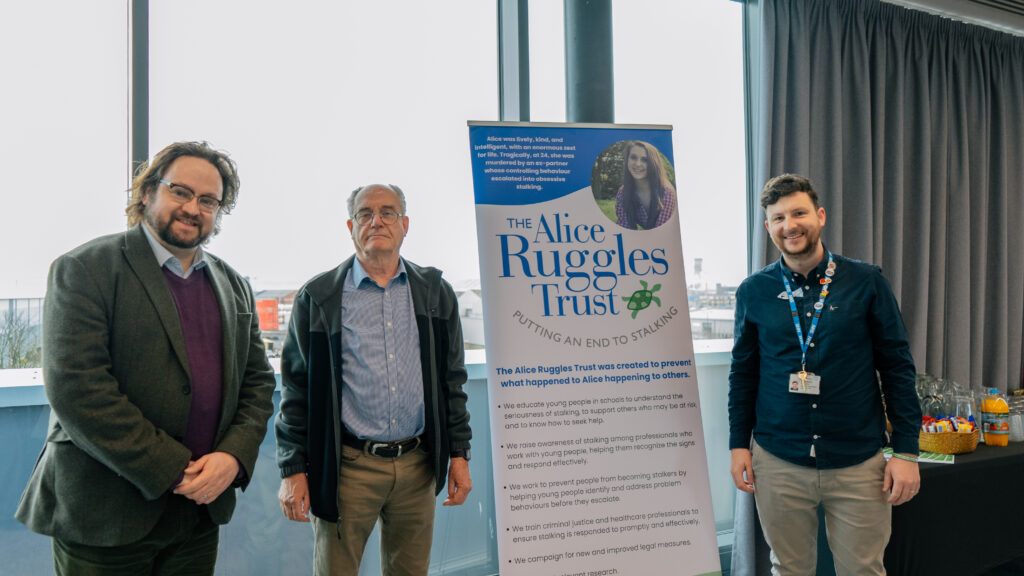
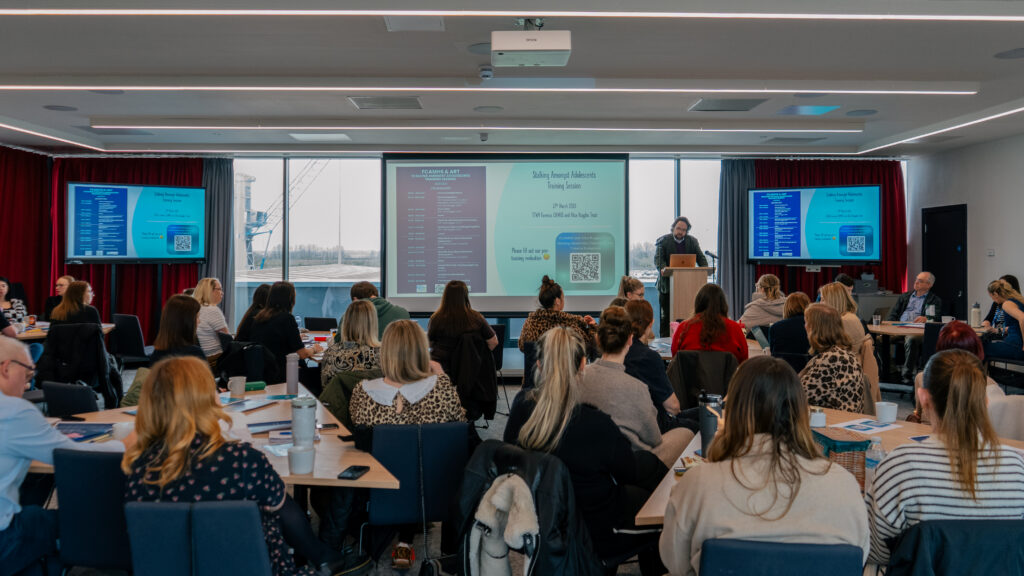
More than 100 children’s practitioners have taken part in specialist training to help them identify stalking behaviours in adolescents and support young people to recognise unhealthy relationships.
The two, day-long events brought together a range of agencies working with children aged between 10-17 across Cleveland.
Sessions focused on raising awareness of the impact of stalking, how to identify warning signs, and how to respond effectively to safeguard young people.
The Stalking in Adolescents training – delivered in partnership with The Alice Ruggles Trust and Tees, Esk and Wear Valleys NHS Foundation Trust (TEWV) – was funded by the Office of the Police and Crime Commissioner for Cleveland.
One of the sessions was hosted by Clive Ruggles, father of Alice Ruggles who was murdered by her stalker in Gateshead in 2016.
Following Alice’s murder, Clive and his wife, Sue Ruggles, set up a charity in Alice’s name – The Alice Ruggles Trust. The charity helps young people to understand stalking, the potential risks, and what they can do about it.
The aim of the training was to upskill practitioners and services working directly with young people to know how to spot the signs or indicators of stalking at the earliest opportunity, then know how to respond effectively to prevent possible harm.
What is stalking?
Stalking can be recognised by a pattern of fixated, obsessive, unwanted and repetitive behaviours. It can have a profound and lasting impact on victims, affecting mental and physical health, finances, and wider aspects of life including education, employment and relationships.
The sessions also emphasised that individuals are most at risk from former romantic partners, underlining the importance of helping young people to build and maintain healthy, respectful relationships.
Police and Crime Commissioner Matt Storey said: “Stalking is a serious and significant issue in Cleveland, with latest Office for National Statistics (ONS) placing stalking and harassment-related crime here as the sixth highest across England and Wales.
“By equipping practitioners with the knowledge to improve early identification, intervention and coordinated support, the escalation of stalking can be prevented, harm can be reduced and those committing the crime can be held accountable.
“When it comes to stalking behaviours in young people, it is almost invisible until it is too late. This work directly contributes to my Police and Crime Plan priorities to improve safety for women and girls and to reduce crime, antisocial behaviour and harm across all our communities.”
Dr Christopher Rosenbrier, Principle Applied Psychologist within the Forensic Child and Adolescent Mental Health Services at TEWV, added: “We know that young people are disproportionately affected by stalking, yet it can be difficult for professionals to identify this behaviour. Our training set out to strengthen practitioners’ understanding so they can better support young people to recognise stalking and respond in ways that reduce the risk of harm.
“The professionals who attended the training work with young people every day, at a time when they are forming the foundations of their future relationships. This provides a crucial opportunity not only to spot emerging concerns but to intervene before unhealthy patterns become more entrenched and continue into adulthood.
“Overall, we share the Alice Ruggles Trust’s mission to prevent what happened to Alice from happening to anyone else, and to create generations of young people who understand stalking, its risks, and what they can do about it.”