The Police and Crime Commissioner (PCC) has a statutory responsibility to hold Cleveland Police to account on behalf of the public.
One of the key ways this is achieved is through a coordinated and transparent programme of scrutiny activity.
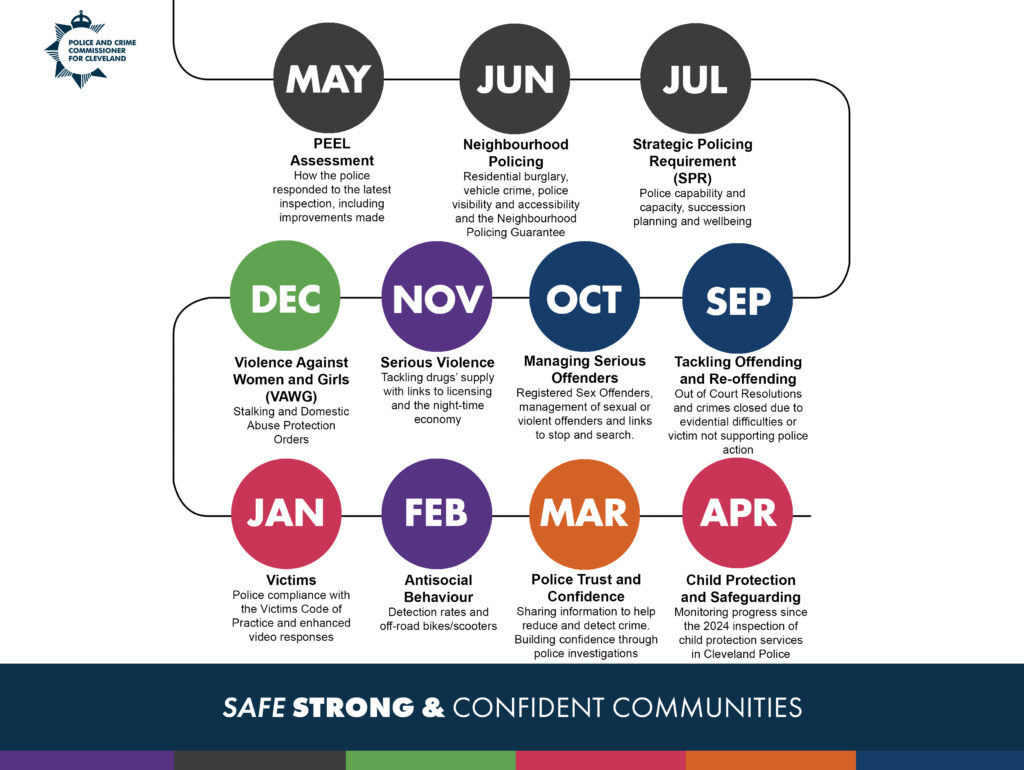
Each year, the Office of the Police and Crime Commissioner (OPCC) develops a Scrutiny Work Programme to shape and guide the PCC’s oversight of Cleveland Police.
This programme is informed by the following:
- Analysis of police performance data and reports
- Feedback from public engagement and consultation
- Findings from the PCC’s other assurance processes
- Reports and recommendations from His Majesty’s Inspectorate of Constabulary and Fire & Rescue Services (HMICFRS)
By identifying issues of local importance—where scrutiny can add real value—the programme ensures that oversight is targeted, timely, and meaningful.
The PCC maintains continuous oversight of the Scrutiny Work Programme and has the flexibility to adjust priorities or respond to urgent issues as they arise. This ensures scrutiny remains dynamic and responsive to the needs of Cleveland’s communities.
Scrutiny Work Programme 2024/25*Please note, this programme may be subject to change.
Monthly Scrutiny Meetings
The main delivery mechanism for the Scrutiny Work Programme is the PCC’s Monthly Scrutiny Meetings with the Chief Constable.
These meetings provide a formal platform for the PCC to do the following:
- Examine police performance
- Question senior leaders and subject matter experts
- Challenge the force on progress against key priorities
The PCC applies a consistent assurance process at each meeting. After reviewing the evidence presented, he will determine whether he is:
- Assured
- Partly assured
- Not assured
This assurance rating helps identify what further action may be required. The OPCC records, tracks, and monitors these actions, enabling the PCC to maintain a “watching brief” on critical areas of performance and improvement.
Terms of Reference for Scrutiny meetings Outcome of previous monthly meetingsSee below scrutiny topics to be considered for 2025/26